Estudios de álbumes · #10
Ellington at Newport
Duke Ellington · 1956 · Big Band
Este estudio solo está disponible en inglés.
SECTION 1 — CJ DEEP DIVE
-
Quick Reference Album Name: Ellington at Newport Artist: Duke Ellington and His Orchestra Release Date: 1956 Recording Date: July 7, 1956, live at the Newport Jazz Festival, Freebody Park, Newport, Rhode Island (with some studio re-recording on July 9, 1956) Label: Columbia Records (CL 934) Producer: George Avakian Genre/Subgenre: Big Band / Swing, performed in the modern jazz era
-
Historical Context By the mid-1950s the big band era was widely considered over. The great swing orchestras had mostly broken up, victims of changing tastes, the rise of bebop and small groups, and the economics of keeping a dozen or more musicians on the road. Even Duke Ellington was struggling. His orchestra was seen by many as a glorious relic, a nostalgia act coasting on past triumphs, and he was sometimes paying his musicians out of his own songwriting royalties just to keep the band together.
Ellington had been a titan since the 1920s and 1930s, when his orchestra at Harlem’s Cotton Club pioneered a richly composed, orchestral approach to jazz that treated the band as a single instrument. He had written hundreds of pieces, including standards like Mood Indigo, Sophisticated Lady, and Take the A Train. But by 1956 the cultural spotlight had moved to bebop, hard bop, and cool jazz.
The Newport Jazz Festival invited Ellington to perform in July 1956. The set seemed routine until Ellington called an old two-part piece from 1937, Diminuendo and Crescendo in Blue, and instructed his tenor saxophonist Paul Gonsalves to fill the gap between the two halves with an improvised solo. What followed was one of the most famous moments in jazz history.
Gonsalves played twenty-seven choruses of blues, building and building as the crowd grew wild and a woman in a black dress began to dance, setting off a near-riot of excitement. The performance made headlines, landed Ellington on the cover of Time magazine a few weeks later, and revived his career completely. Ellington would later say, only half-joking, that he was born at Newport in 1956.
- The Musicians
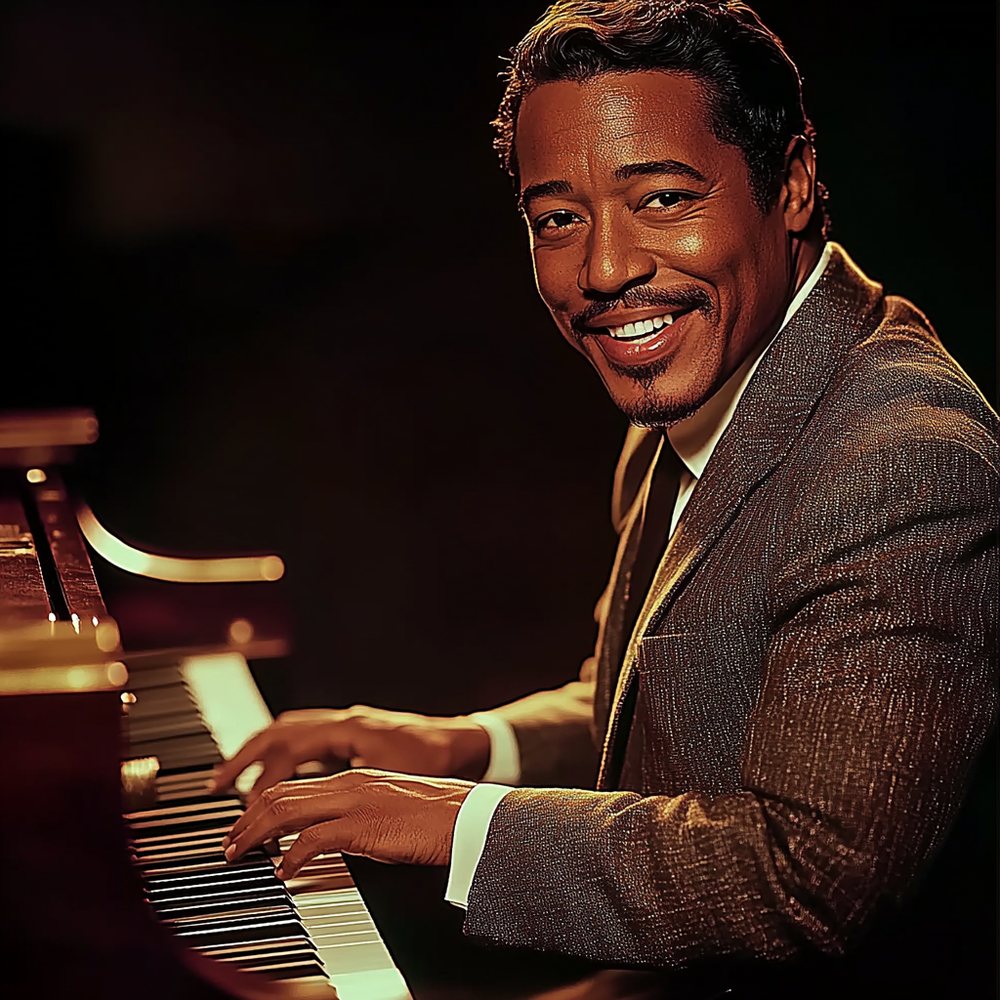
Duke Ellington — Piano, Composer, Bandleader: Born Edward Kennedy Ellington in Washington, D.C. in 1899. One of the towering figures of American music, a composer and bandleader of genius who wrote thousands of works across a half-century career. He treated his orchestra as his true instrument, composing specifically for the individual sounds of his players. More than a jazz musician, he was one of the great American composers of any kind. Other landmark recordings: Black, Brown and Beige (1943), Such Sweet Thunder (1957), Money Jungle (1962), Far East Suite (1967).
Paul Gonsalves — Tenor Saxophone: A warm-toned, fluent tenor saxophonist who had joined Ellington in 1950 and was sometimes overshadowed by the band’s more famous soloists. At Newport he became a legend in six minutes. His twenty-seven-chorus solo on Diminuendo and Crescendo in Blue is the heart of this album and one of the most famous improvisations ever recorded. He remained a beloved member of the orchestra until his death in 1974, days before Ellington’s own.
Johnny Hodges — Alto Saxophone: The star soloist of the Ellington orchestra and one of the greatest alto saxophonists in jazz, famous for a gorgeous, sighing, sensuous tone and an unmatched gift for melody. Featured on Jeep’s Blues on this album. The emotional and melodic anchor of the band for decades.
Harry Carney — Baritone Saxophone: The deep foundation of the Ellington sound. Made the baritone saxophone a defining voice in big band jazz. With Ellington from 1927 until the very end — nearly fifty years of unbroken loyalty. The warm bedrock under all those famous horn voicings.
The Orchestra: Clark Terry, Ray Nance, Willie Cook, and Cat Anderson on trumpets. Britt Woodman and Quentin Jackson on trombones. Russell Procope and Jimmy Hamilton on reeds. Jimmy Woode on bass and Sam Woodyard on drums, whose driving beat helped push the crowd into a frenzy.
- Why This Recording Matters Ellington at Newport matters first as one of the great comeback stories in American music. A single performance reversed the fortunes of the most important composer in jazz, proving that the big band was not dead. It became the best-selling album of Ellington’s career and led to a productive final period that produced some of his most ambitious work. Rarely has one night so completely changed an artist’s trajectory.
Musically, the album captured something that studio recordings rarely did: the raw communal excitement of live jazz at its most thrilling. The Gonsalves solo is a master class in how an improviser builds tension over a long span, riding a simple blues structure chorus after chorus while the energy climbs toward ecstasy. You can actually hear the crowd erupting.
The album also helped establish the jazz festival as a central institution and the live festival recording as a significant art form. The image of a crowd whipped into a frenzy by an extended improvisation prefigured the energy of the rock concert era to come.
- Track-by-Track Listening Guide
Newport Jazz Festival Suite, Part 1 (Festival Junction): A relaxed, swinging showcase that passes the spotlight from soloist to soloist, introducing the members of the band. Listen for the parade of distinct voices and the easy, confident swing.
Newport Jazz Festival Suite, Part 2 (Blues to Be There): A slower, bluesier mood piece. Listen for the rich, signature Ellington harmony in the horn writing — those famous warm and slightly melancholy voicings.
Newport Jazz Festival Suite, Part 3 (Newport Up): A fast, exciting flag-waver. Listen for the high energy, the trading between soloists, and the sheer drive of the rhythm section.
Jeep’s Blues: A feature for Johnny Hodges, on a tune named after him. Listen for his unmistakable tone, the way he slides into and around notes with a sensuous, vocal quality no one has ever matched. The calm before the storm.
Diminuendo and Crescendo in Blue: The legendary centerpiece. Built in two halves, written in 1937. Paul Gonsalves plays twenty-seven choruses of tenor saxophone over a hard-driving blues. Listen for how the solo starts modestly and builds relentlessly, chorus after chorus, as you hear the crowd erupting, shouting, and dancing. By the climax the energy is almost overwhelming. This is the sound of a comeback happening in real time.
-
Connections and Relationships Influences: Ellington’s own 1930s and 1940s orchestra recordings; the original 1937 studio version of Diminuendo and Crescendo in Blue; the blues tradition. Contemporary: The mid-1950s hard bop and cool jazz world that had seemingly left big bands behind, against which this triumphant live set stood as a glorious rebuke. Count Basie’s orchestra also enjoyed a resurgence in the same period. Influenced later: Ellington’s own renaissance including Such Sweet Thunder (1957); the wave of celebrated live jazz festival albums; the broader culture of the live album as a documented event. Listen next: Duke Ellington, Such Sweet Thunder (1957); Duke Ellington and John Coltrane (1962); Count Basie at Newport (1957).
-
Timeline Placement A fascinating case of eras overlapping. The music itself belongs to the Swing and big band tradition Ellington helped create in the 1920s and 1930s. But the recording was made in 1956, in the thick of Hard Bop and Cool Jazz. The album proved that the older tradition still had enormous vitality. What came before it was three decades of Ellington genius and the decline of the big band. What came after was Ellington’s late renaissance and a renewed respect for the orchestral tradition.
-
Legacy One of the most important live albums in jazz history. Consistently listed among the essential jazz recordings. The Gonsalves solo is studied as a peak of live improvisation. Added to the National Recording Registry in 2004. Treasured both as great music and as a symbol of resilience.
The album’s reputation grew more complicated after a 1990s discovery revealed that some portions were reconstructed in the studio two days later. This has not diminished its standing. If anything, knowing the full story has deepened appreciation for the genuine magic of the live performance at its heart.
-
Curiosities Gonsalves played twenty-seven choruses — no one had planned for that many. Ellington kept the band vamming behind him, sensing something extraordinary was happening. A woman in a black dress began dancing in the aisles and nearly caused a riot. Newport organizers were so alarmed they briefly considered stopping the show. Ellington appeared on the cover of Time magazine weeks later, his face above the headline “The Duke Rebounds.” Some portions of the album were re-recorded in the studio two days after the concert. The Gonsalves solo itself, however, is the real thing.
-
Listening Assignment Three albums that led: Duke Ellington, Ellington at Newport 1956 Complete (the full unedited session); Duke Ellington, Black, Brown and Beige (1943); Count Basie, The Atomic Mr. Basie (1957). Three albums influenced: Duke Ellington, Such Sweet Thunder (1957); Ellington and Coltrane (1962); Charles Mingus, Mingus Ah Um (1959). One modern recording: Wynton Marsalis and Jazz at Lincoln Center Orchestra, Live in Swing City (1999).