
Études d'albums · #08
Head Hunters
Herbie Hancock · 1973 · Jazz Fusion
Cette étude n'est disponible qu'en anglais.
SECTION 1 — CJ DEEP DIVE
-
Quick Reference Album Name: Head Hunters Artist: Herbie Hancock Release Date: October 26, 1973 Recording Dates: September 1973, Wally Heider Studios and Different Fur Trading Co., San Francisco Label: Columbia Records (KC 32731) Genre/Subgenre: Jazz-Funk / Jazz Fusion
-
Historical Context By the early 1970s jazz was being transformed by electricity. Miles Davis had plugged in on Bitches Brew in 1969 and opened the floodgates of jazz fusion. Hancock had spent the late 1960s as a member of Miles Davis’s revolutionary Second Great Quintet, then led the abstract electric Mwandishi band. That group made dense, spacey music critics admired but few people bought.
The turning point was Sly and the Family Stone. Hancock fell in love with deep joyful funk and decided he wanted to make music that grooved hard and connected with ordinary listeners — especially Black audiences who had drifted away from jazz. He disbanded Mwandishi, kept only woodwind player Bennie Maupin, and assembled a tight new funk band. The goal was simple and radical for a jazz musician of his standing: he wanted to make people dance.
- The Musicians
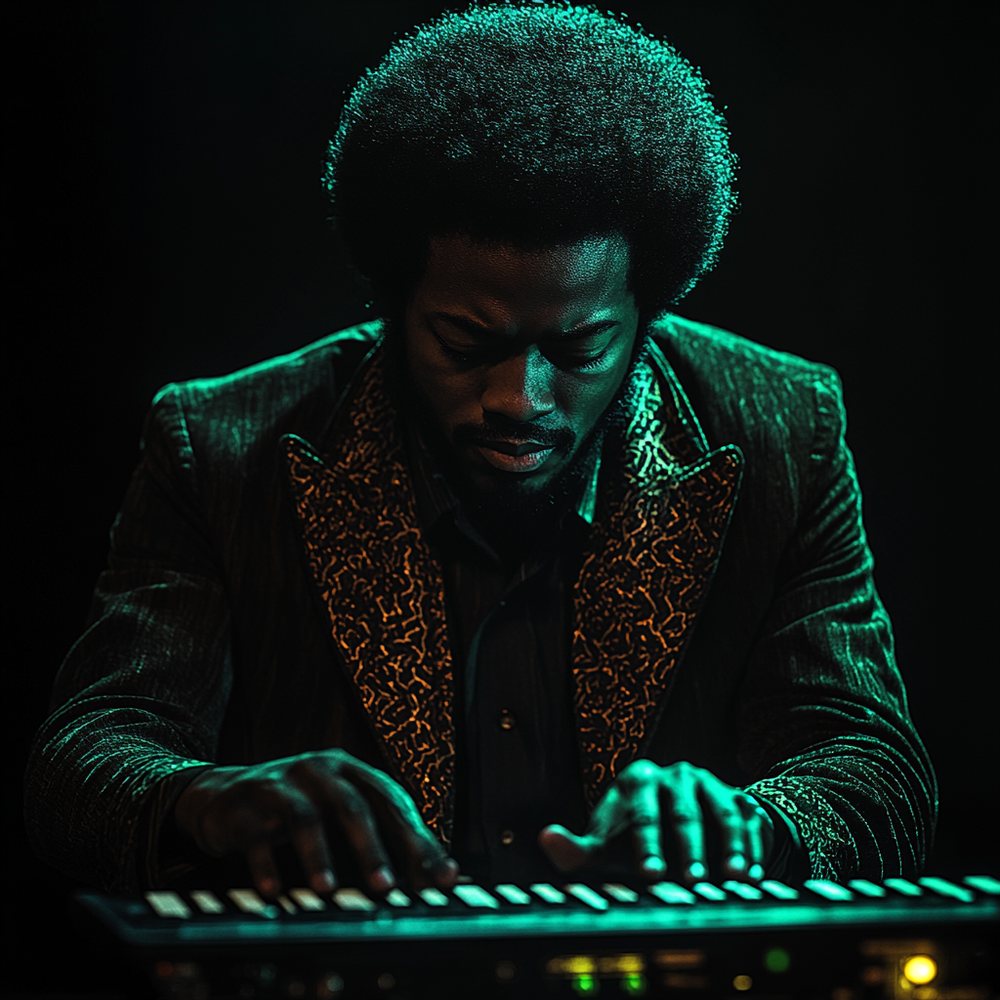
Herbie Hancock — Keyboards and Synthesizers: Born in Chicago in 1940. Child prodigy who performed a Mozart concerto with the Chicago Symphony at age eleven. Defining jazz pianist of the 1960s — wrote standards like Maiden Voyage and Cantaloupe Island. On Head Hunters he set the acoustic piano aside for electric keyboards: Fender Rhodes, Hohner Clavinet, and ARP synthesizers on which he played the famous bass line of Chameleon. Other landmark recordings: Maiden Voyage (1965), the Miles Davis quintet albums, Future Shock (1983).
Bennie Maupin — Reeds and Woodwinds: The only musician kept from the Mwandishi band. Played tenor and soprano saxophone, saxello, alto flute, and especially bass clarinet — its dark woody sound floats through the album. Had also played on Miles Davis’s Bitches Brew.
Paul Jackson — Bass: The muscular, deeply funky heart of the band. Electric bass lines elastic, propulsive, and irresistibly physical, locking with the drums to create grooves that feel bottomless.
Harvey Mason — Drums: Conservatory-trained with a crisp, precise, funky feel. Co-created the irresistible groove of Chameleon. Clean, danceable, deeply in the pocket.
Bill Summers — Percussion: Added a vast palette of hand percussion from African and Afro-Latin traditions. His most famous contribution opens Watermelon Man — blowing across a beer bottle to imitate a hindewhu, a flute sound from the Mbuti people of Central Africa.
-
Why This Recording Matters Head Hunters fused jazz and funk into a seamless language and brought it to a mass audience. It became the best-selling jazz album of its time and the first jazz record to reach platinum, proving that improvised sophisticated music could also be a genuine popular success. It put the groove first — rather than treating funk as a backdrop for jazz solos, Hancock built the music around deep repeating bass and drum patterns. Its influence beyond jazz is enormous: Head Hunters became one of the most sampled albums in hip-hop history. It is a direct ancestor of acid jazz, modern R&B, and the entire culture of groove-based sample-driven music.
-
Track-by-Track Listening Guide
Chameleon: One of the most famous grooves in all of music. Opens with the instantly recognizable bass line — played by Hancock on an ARP synthesizer, not a bass guitar. The groove never lets go across more than fifteen minutes. Notice the squelchy, talking synthesizer solos and the way the music moves from hard funk into a dreamier middle section and back.
Watermelon Man: A radical reworking of a tune Hancock had written a decade earlier. Opens with Bill Summers blowing across a beer bottle to imitate a hindewhu pygmy flute sound from Central Africa. The groove is slinky and laid-back, a master class in how much space and restraint can add to funk.
Sly: A tribute to Sly Stone. The most jazz-leaning track. Faster and more frantic, with room for serious blowing. Bennie Maupin’s fiery saxophone solo shows these players could improvise with real intensity.
Vein Melter: The album closes with a slow, smoky, atmospheric groove. Warm Fender Rhodes and dark mournful bass clarinet over a deep unhurried pulse. Late-night funk that sends the album out on a wave of soulful calm.
-
Connections and Relationships Influences: Miles Davis, Bitches Brew (1970); Sly and the Family Stone, There’s a Riot Goin’ On (1971); James Brown’s funk. Contemporary: Weather Report, Mahavishnu Orchestra, the broader fusion explosion of the early 1970s. Influenced later: Hancock’s own Thrust (1974); acid jazz; jazz-funk; hip-hop through sampling. Listen next: Herbie Hancock, Thrust (1974); Miles Davis, On the Corner (1972); The Headhunters, Survival of the Fittest (1975).
-
Timeline Placement Belongs to the Fusion era of the 1970s, specifically the jazz-funk branch. Builds directly on Miles Davis’s electric fusion. What sets it apart is its embrace of the groove and the dance floor. Head Hunters is the hinge where jazz fusion turned decisively toward funk and the popular mainstream.
-
Legacy Added to the National Recording Registry in 2007. Landmark and one of the most important jazz albums of the 1970s. Its commercial breakthrough is now seen not as a compromise but as a genuine artistic and cultural achievement. Initially some jazz purists resisted — that resistance has almost entirely faded.
-
Curiosities The Chameleon bass line is a synthesizer, not a bass guitar. A beer bottle opens Watermelon Man. Head Hunters became one of the most sampled albums in hip-hop history — Chameleon and Watermelon Man have been used by countless producers. Hancock grew up listening to both classical music and jazz, performing Mozart at age eleven.
-
Listening Assignment Three albums that led: Miles Davis, Bitches Brew (1970); Herbie Hancock, Maiden Voyage (1965); Sly and the Family Stone, There’s a Riot Goin’ On (1971). Three albums influenced: Herbie Hancock, Thrust (1974); Brand New Heavies, Brand New Heavies (1990); D’Angelo, Voodoo (2000). One modern recording: Thundercat, Drunk (2017).